
Power surges strike Canadian homes thousands of times each year. Most homeowners never see the damage coming until a costly appliance or electronic device stops working. Lightning strikes, downed power lines, and grid switching events all send sudden voltage spikes through your wiring. Without protection, those spikes reach every outlet, every light fixture, and every connected device in your house.
A whole house surge protector installs at your main electrical panel and blocks excess voltage before it spreads through your circuits. The cost is far lower than replacing a ruined furnace board, a fried refrigerator compressor, or a damaged television. For Durham Region homeowners, this guide covers what a whole house surge protector costs, what factors affect the price, and how to choose the right unit for your home.
What Is a Whole House Surge Protector?
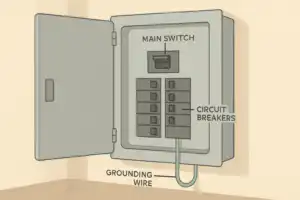
A whole house surge protector, also called a surge protection device or SPD, mounts inside or next to your main electrical panel. When voltage rises above a safe threshold, the device redirects the excess energy to your grounding system. This happens in milliseconds, fast enough to shield your appliances and electronics from harm.
Unlike a power strip, which only protects devices plugged into it, an SPD covers every circuit in your home. Your HVAC system, kitchen appliances, lighting fixtures, and hardwired electronics all receive protection the moment the device activates.
Most whole house surge protectors use metal oxide varistors, or MOVs, as their primary protection component. MOVs absorb surge energy and send it to ground. Over time, they gradually wear down, which is why most units include indicator lights that show whether the device is still active. When the indicator changes or goes dark, the unit needs replacement.
Whole House Surge Protector Cost Breakdown
Device Cost
The surge protector unit itself typically costs between $60 and $400 CAD, depending on the brand, surge capacity, and type. Here is a breakdown of common models and their approximate price ranges:
- Square D HEPD80 (Type 1 and Type 2) — $95 to $140. Rated for 80kA surge capacity. Works with most residential panels and includes both indoor and outdoor mounting options.
- Eaton CHSPT2ULTRA (Type 2) — $115 to $145. Rated for 108kA, one of the highest residential capacities available. Universal mounting fits most panel brands.
- Eaton CHSPT2SURGE (Type 2) — $75 to $110. Rated for 36kA. A solid midrange option with LED status indicators and NEMA 4 enclosure.
- Siemens QSA2020SPD (Type 2) — $90 to $140. Designed for Siemens residential panels with straightforward installation.
- Square D HEPD25 (Type 2, universal) — $200 to $400. Compatible with any load center. Higher price reflects universal fit and extended warranty coverage.
Installation Labour Cost
Licensed electricians in Ontario typically charge $100 to $300 for installation. The job usually takes one to two hours, which includes shutting off power, mounting the device, connecting it to your panel and grounding system, and testing the installation. Electrician hourly rates in Durham Region range from $80 to $150 per hour.
The total installed cost for a whole house surge protector in the Whitby and Durham Region area generally falls between $300 and $700 CAD, depending on the unit selected and the condition of your electrical panel.
Additional Costs to Consider
Some homes require extra work before a surge protector can be installed safely:
- Grounding system repairs — If your home has an inadequate ground connection, repairs can cost $150 to $700. Proper grounding is essential for a surge protector to function correctly.
- Electrical panel upgrade — Older fuse boxes or outdated breaker panels may not support modern SPDs. A panel upgrade costs $1,500 to $4,000 or more depending on the scope of work.
- Permit and inspection — The Electrical Safety Authority may require a permit for panel-mounted work. Fees generally range from $50 to $150.
Type 1 vs Type 2 Surge Protectors
Understanding the difference between these two types helps you select the right protection for your home.
Type 1 Surge Protectors
Type 1 SPDs install before your main breaker, at the service entrance. They handle the largest surges, including direct lightning strikes and major utility grid events. Because of their installation location, a licensed electrician and utility coordination are often required. Type 1 units cost slightly more and offer the highest level of protection for homes in areas with frequent lightning activity.
Type 2 Surge Protectors
Type 2 SPDs install at your main breaker panel, after the main breaker. They protect against both external surges that pass through the main breaker and internal surges from large appliances cycling on and off. Type 2 units are the most common choice for residential installations because they are easier to install and provide excellent all-around protection.
Some manufacturers offer combined Type 1 and Type 2 devices, which provide the broadest coverage in a single unit. The Square D HEPD80 is one example of a dual-rated device.
Key Ratings to Understand
Surge Current Capacity (kA)
This rating, measured in kiloamperes, tells you how much surge energy the device can handle. Higher ratings mean better protection. For residential use, a minimum of 40kA is recommended. Premium units like the Eaton CHSPT2ULTRA offer 108kA capacity.
Clamping Voltage
Clamping voltage is the threshold at which the device begins redirecting excess energy to ground. Lower numbers are better because they let less harmful voltage through to your devices. Look for a clamping voltage of 600 volts or lower.
Response Time
SPDs activate within nanoseconds. Faster response means less surge energy reaches your electronics. All reputable residential units respond fast enough for home protection, so this is not usually a deciding factor between models.
Why Durham Region Homeowners Need Surge Protection
Durham Region experiences its share of severe weather, including summer thunderstorms and winter ice storms. The Insurance Bureau of Canada reports that insured catastrophe losses in Canada have risen sharply, with annual losses averaging nearly $2 billion since 2009. Personal property claims, which include electronics and appliances, account for over 60 percent of insured weather disaster losses.
Ontario ice storms frequently down power lines, which can send massive surges through the grid when service is restored. A single lightning strike near your home can generate thousands of volts. Even routine events, like your air conditioner compressor cycling on, create smaller surges that gradually degrade sensitive electronics over time.
According to the Electrical Safety Authority, Ontario homes with older electrical systems are at greater risk because aging wiring and inadequate grounding reduce natural surge resistance. Homes built before 1980 should especially consider surge protection as part of a broader electrical safety upgrade.
What to Expect During Installation
When you hire a licensed electrician to install a whole house surge protector, here is what the process looks like:
- Panel assessment — The electrician inspects your main panel to confirm the SPD is compatible and your grounding system is adequate.
- Power shutdown — Power to the panel is turned off so the device can be safely mounted and connected.
- Mounting and wiring — The SPD mounts inside or beside the panel. Wires connect to dedicated breaker slots and to the grounding bus.
- Testing — The electrician verifies the indicator lights show active protection and confirms the circuit is live and properly grounded.
- ESA notification — If required, the installation is filed with the Electrical Safety Authority for inspection.
The entire process usually completes within one to two hours for a straightforward installation. If grounding repairs or panel upgrades are needed, the timeline extends accordingly.
How Long Do Whole House Surge Protectors Last?
Most whole house surge protectors last 5 to 10 years under normal conditions. MOV components degrade each time they absorb a surge. Large events, like nearby lightning strikes, cause more degradation than small everyday surges.
Check your unit regularly for indicator light changes. For more details on how these devices work with your panel, read our guide on whole home surge protection. When the protection indicator shows the device has exhausted its capacity, replacement is required. Some manufacturers offer connected equipment warranties that cover damage to your devices while the SPD is active, adding another layer of financial protection.
Surge Protectors vs Power Strips
Many homeowners believe a power strip with a surge rating provides sufficient protection. Power strips offer point-of-use coverage for whatever devices you plug into them, but they leave your HVAC system, hardwired appliances, and lighting completely unprotected. They also have much lower surge capacity than panel-mounted SPDs, typically rated for 1,000 to 3,000 joules compared to the tens of thousands of joules a whole house unit handles.
The best approach uses both layers together. A whole house surge protector at the panel blocks large external surges, while quality power strips at individual outlets catch any residual voltage that slips through. This layered strategy gives your home the most complete protection available.
Signs Your Home May Already Have Surge Damage
Power surges do not always cause immediate, obvious failures. Look for these warning signs:
- Flickering or dimming lights when large appliances start up
- Electronic devices that reset unexpectedly or behave erratically
- Appliances with burned or unusual smells near their power connections
- Frequent tripped breakers with no clear cause
- Shortened lifespan for electronics and small appliances
If you notice any of these symptoms, have a licensed electrician inspect your electrical system. The problem may be recurring surges, inadequate grounding, or an aging panel that needs attention.
Get Professional Surge Protection Installed in Durham Region
A whole house surge protector is one of the most affordable investments you can make to protect your home. For a few hundred dollars, you gain coverage for every circuit, every outlet, and every appliance in your house. When you consider that a single fried HVAC control board can cost $500 to $1,500 to replace, the math is straightforward.
Wilson Electric has helped homeowners across Whitby, Oshawa, Ajax, Pickering, and Clarington safeguard their homes with professional surge protection installation. Every installation meets the Ontario Electrical Safety Code, and we stand behind our work with a service and code guarantee.
For expert electrical services in Whitby and across Durham Region, call +1 905-999-5509 or contact us online for a free estimate!
A whole home surge protector only works as well as the panel it feeds from, so the two upgrades really go hand in hand. If your service panel is older or already crowded, our team can pair the surge device with a proper electrical panel upgrade in Whitby and the wider Durham Region. Booking both in one visit means a single inspection and a panel that is ready for the protection, which is why many homeowners ask us to upgrade the electrical panel at the same time.